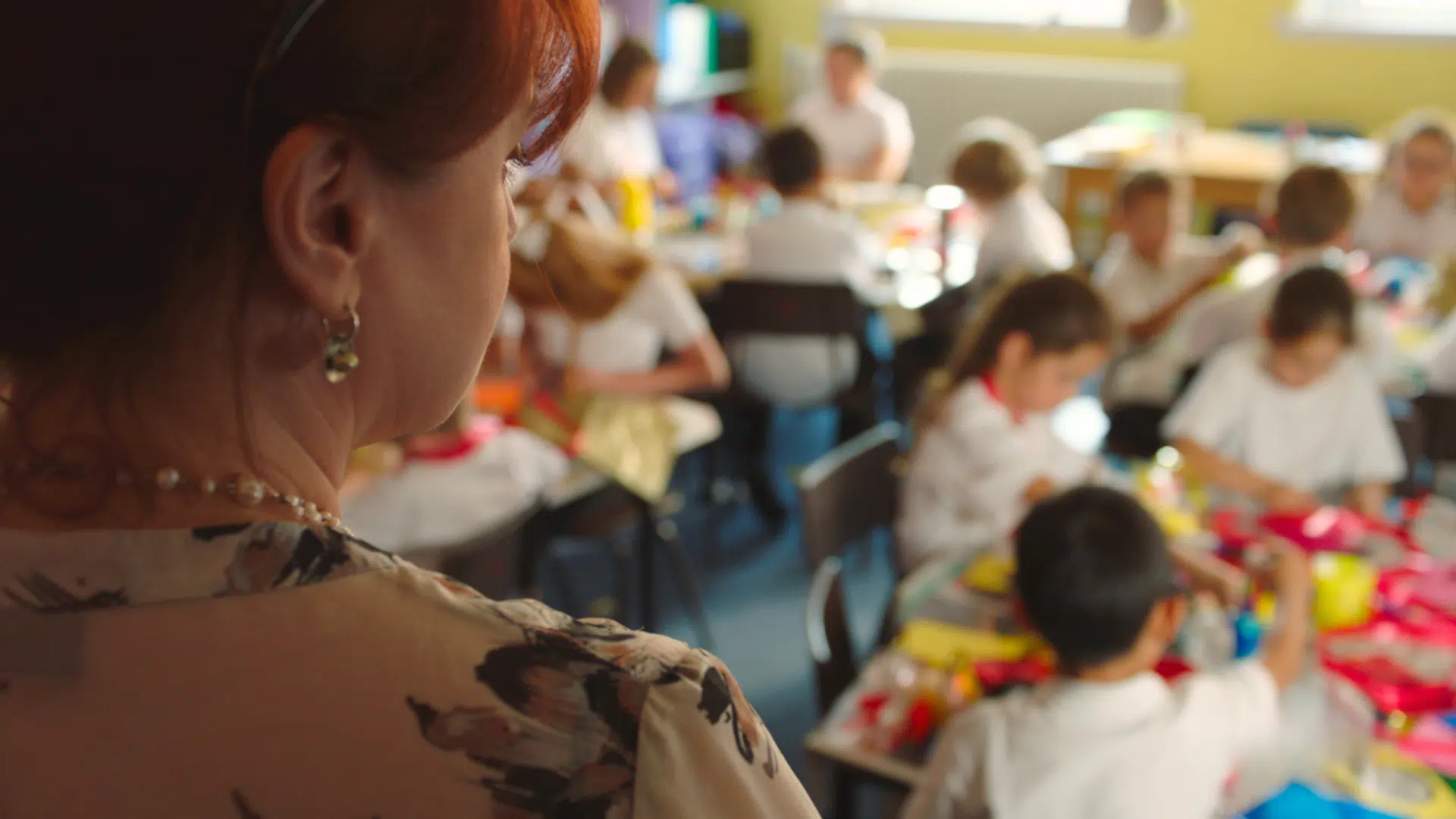
The Role of a SENCo: Rachel introduces herself
I’m a SENCo and essentially that means I am the Special Educational Needs COordinator for my school.
What is the role of a Senco in a school
Ideally, a SENCo would be part of the leadership team of the school. This ensures that special needs is high on the priority list for the schooland it shapes the ethos of the school.
What’s it like being a Senco?
There’s lots of liaising with external agencies, lots of frustration, but ultimately it’s the best job in the world because you’re advocating for the most vulnerable people within our society.
When parents notice differences
I think the parents are always the first to notice when there’s something maybe not quite right with their child, something that you think, you know unusual behaviours, there’s obvious unusual behaviours, language delays…signs to look for if there’s a language delayor a physical delay, but there’s also quite, sort of small signs that parents look out for & what I hear a lot from parents is, that when they’re at children’s parties, or if they’re at a playgroup they notice things with their children they’re perhaps sort of stand out to them.
And it could be anything, it could be anything. That 2-year check is vital for young children I would say.
The importance of a 2-year check
That’s when a health visitor can pick up on anything that they see or anything that the parents might have seen and then the health visitor is a key person in sort of directing the parents to some additional support, or some places that they can go to potentially, have an assessment for their child. During the pandemic, lots of 2-year checks didn’t take place unfortunately, well certainly not face-to-face anyway. Lots of these two-year checks are virtual and I think a lot of things were missed.
What a nursery teacher might notice
Once your child starts at Nursery it could be that the teacher, the nursery teacher notices things about the child. Again lots of little things, maybe that they’re walking on tiptoes or they’re playing alongside children rather than with other children, perhaps they don’t want to come and sit with the other children on the carpet, they’re struggling physically outside, they’re not picking up on basic phonics, rhyming, songs, lots and lots of different signs.
Talking to the school if you’re concerned
I would say go with your gut, and I would say forge a really good relationship with your Nursery teacher, your reception teacher, well your general, you know your child’s teacher and form that great relationship & it’s easier to talk to them. I would go to them as soon as you’re worried.
What can the school do to help?
The teacher can look out for things & they can give you the heads up:
Are they doing this at school?
Are they not noticing doing this at school?
Are they doing other things at school?
I would go pretty much straight away and just speak to them, just speak to them,and have an honest conversation with them. A school can do quite a lot of things.
Ordinarily Available provision – what is that?
So what we would say is that we would look for any provision that’s Ordinarily Available within a school. So that could mean some changes in, changes in teaching styles, the classroom setup, small intervention groups. And every Borough has got an Ordinarily Available document on their website that you should you should read and have a look at, it will give you ideas about things
that your school should be able to provide. So for example we run an intervention called Talkboost.
Examples of interventions for children
So Talkboost for our younger children helps them with their language acquisition and their social communication. We’ve got another group called Attention Autism, so these are for pupils that have been diagnosed with autism and it’s a highly motivating group that is working on their attention and listening. You know there’s loads of interventions that you can provide as a school within your Ordinarily Available provision.
What is an EHCP?
If a child requires more than this, provision that is more than what is Ordinarily Available at your school, then you’d apply for an Education Health Care Plan (EHCP) the application for this, it varies, borough to borough. It’s a big, lengthy document that takes a while to complete. But ideally, the plan comes with funding & this funding is usually used for additional support at school, hopefully through the form of a learning support assistant. Some boroughs it doesn’t come with funding straight away, that’s an additional application, but here in Barnet, it comes with funding.
How does the funding work for an EHCP?
The funding is banded, so they look at the needs of the child and they sort of give you a banding for what they think and would cover the provision cost
for that child. The document then is a legal document.
How does an EHCP work?
We call it the golden ticket. This is your legal document that will track your child and be given to your child until they’re 25. It has measurable outcomes on there that your school, must help the child meet these outcomes & it’s reviewed annually.
What if your child’s teacher notices something?
The ideal scenario would be if a parent noticed something about their child before you and they came to you but on occasions, it’s the teacher that has to speak to the parents and I think this is a key conversation & something that’s so important, because guaranteed these parents will remember this forever, this first conversation with a teacher, that there’s something maybe quite different or there’s something that the teacher is concerned about, so you have to go about it with lots of love and lots of nurture & empathy.
You, as SENCO, or ideally the teacher would speak to the parent first of all because I think if you call in the SENCO at the first stop, it’s really sort of intimidating for the parents and when you see another adult that you’re not used to seeing, attending a meeting I think it can it can be quite scary for them. So initially the teacher would have the conversation with the parents & perhaps you would come up with a few strategies together on things that you can try & work on initially at school.
When a SENCO gets involved
And then I would say not long after you would call in the SENCO and then maybe some formal referrals would be made at that point, maybe to a speech & language therapist, to the paediatrician. We’ve got lots of external agencies that we can refer to depending on the need.
Helpful ways to communicate your concerns
Quite often children are very different at home to how they are at school and I think a really good tip would be to take videos of your children, make notes of the things that you’re worried about and show them to the teacher and say
“Look have you seen this, have you seen this behaviour at school, is this something that you see?”
because quite often they are different at school & at home but the key thing is, that you work together, it doesn’t matter that they’re different at school to at home, you both have a common goal & you work together.
Diagnosis and grieving
Initially when you see that your child is different & perhaps they would get a diagnosis of some sort, often parents go through a grieving process because the child is not quite who they thought they would be & you’re worried about their future because when you have a child, you have their future planned out in your head and, you know it might not be the future you saw for them & I think it’s so important for schools to be sort of empathetic about that, sympathetic about that & to understand how the parents are feeling and it can put a big pressure on families as well.
Families feeling the pressure
When you do have a child that may get a diagnosis who has difficulties, it puts a big pressure on the family, on your relationships, but you’ll get through it, you’ll get through it with the right support. But it is a process & we all need to be aware of that and be sympathetic to it.
Hearing news from her son’s teacher
I can remember the first time that my son’s Nursery had some concerns about him and I remember going into the room and again there was somebody there that I wasn’t expecting to be there and they didn’t actually want to say to me that they were worried he had autism. I think they wanted me to say it first and yes I had sort of, sort of feelings that maybe he did have some autistic tendencies. We have autism in the family so it wouldn’t have been that much of a shock if he was, but I think hearing it from them, was a big shock to me still & I remember the day well & I took him to Pizza Express & then I went to meet a friend of mine at Barnet library and I sobbed because I thought:
What’s going to happen now?
“What now? what’s going to happen now?” & sometimes your family can be supportive and our family is supportive, but sometimes you will get maybe members saying “Don’t be silly, he’s lovely, what’s wrong with him, there’s nothing wrong with him” and you’re saying “Well no, we’re not saying there’s anything wrong with him, we’re just saying that you know, perhaps he’s autistic and we need to find the right support for him.” and it puts a huge pressure, huge pressure on the family & I know some parents here don’t tell always, members of their family they keep a diagnosis quiet because they are still worried about the effect or, you know, a stigma attached to a diagnosis.
Keeping a diagnosis quiet
I see parents who don’t want to chase a diagnosis and I see the stigma attached to a diagnosis parents who really want to diagnosis, you know. There’s still in lots of parents minds, a stigma attached to a formal diagnosis of some sort. Here we see a diagnosis as some sort of superpower, because it shows you who you really are and the things that you’re brilliant at and the things that you struggle with and I think the older your child gets – and certainly in my case with my child – the greatest understanding, you know, the bigger the understanding he has of himself the less he worries about things. He understands why he finds some things difficult, because he’s got that understanding of himself & he doesn’t use it as an excuse to get out of anything & he just gets on with it. But with this knowledge that he’s got this superpower that makes him unique and makes him special.
How to be a brilliant SENCO
I think you really need to be transparent when you’re a SENCo, The best relationships I have with parents, are when I’m completely honest with them about processes & completely transparent because processes, sort of referrals, applications for things are frustrating, and they’re very…they can take a very long time and I think you have to be transparent about, be transparent about the mistakes you’ve made and because there will be there will be mistakes that you make and you have to have a really good relationship with them and that is a big part of it. Being transparent, being honest.
I have great relationships with our parents here, you know not always, not always, & that’s difficult, it is always difficult to not take it personally, but generally, I have great relationships because I’m honest and I give them a lot of time and I think you need to be available, you need to be available when they’re having a bad morning, you need to be available when they just need a chat, you just need to be available to them. and I think that’s what makes the best SENCos.
Success for children with additional needs
So the most successful children that I see here, is when we’ve had a really good relationship with the parents and we’ve worked together through their school life you know, to come up with outcomes, support plans that are beneficial for them, that really tap into what we need them you know to be able to do before they leave us. I think being open to this dialogue with parents is just so essential and I think, you know, not everybody gives parents the time that they deserve because really, they they know the child best and listen to them.
And I would say that to all SENCos, all teachers:
Listen to these parents. They do know these children really well
They know them inside and out.
Related Films
Related Factsheets
Related Blog Posts